
Pinecone Jewelry: The Complete Guide to Real Pinecone Necklaces & Pendants
Pinecone jewelry transforms one of nature’s most recognizable forms into something that can be worn, collected and given as a meaningful gift. Some pinecone jewelry simply recreates the shape of a pinecone in metal or another material. Other pieces are made from actual pinecones.
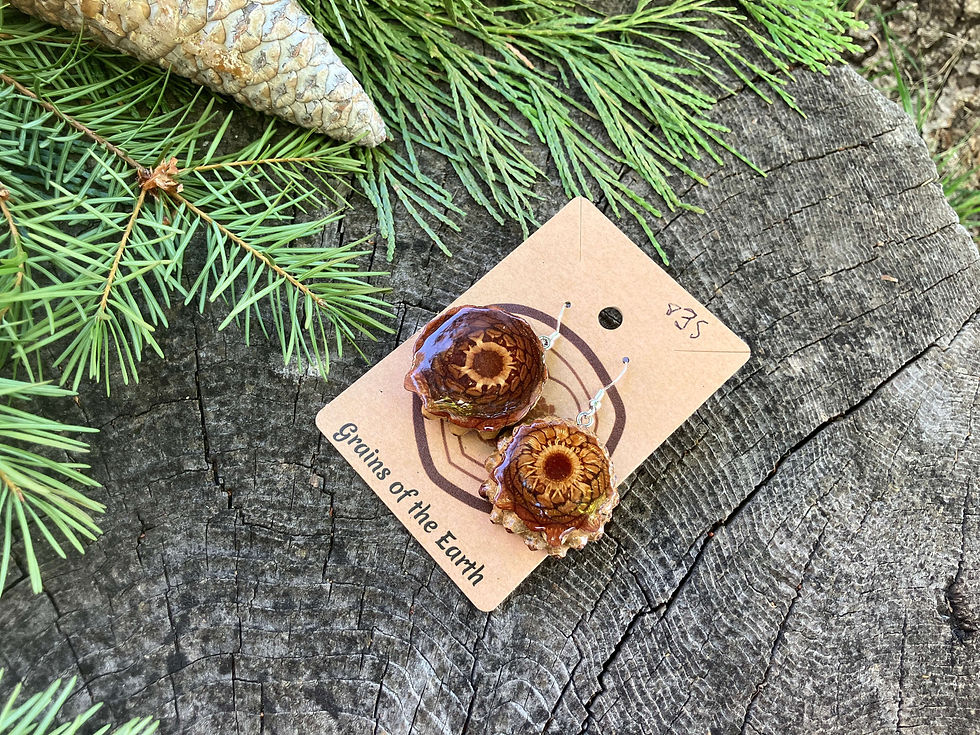
At Grains of the Earth, our handmade pinecone jewelry begins with real knobcone pinecones gathered near Mt. Shasta in Northern California. Each pinecone is selected, prepared and cut to reveal patterns hidden inside the cone, then shaped and finished by hand in McCloud, California.
The result is nature-inspired jewelry in which no two pieces are exactly alike.
This guide explains what real pinecone jewelry is, why knobcone pinecones are especially interesting, how pinecone pendants are created, what pinecones have represented throughout history, how to choose and care for pinecone jewelry, and what makes Mt. Shasta pinecone jewelry distinctive.

What Is Pinecone Jewelry?
Pinecone jewelry is jewelry that either uses the pinecone as a design inspiration or incorporates an actual pinecone into the finished piece.
The phrase can describe several very different types of jewelry.
Some pinecone necklaces and earrings are made from metal that has been cast or shaped to resemble a pinecone. Others preserve miniature whole cones. Real sliced pinecone jewelry takes a different approach: an actual woody pinecone is cut open so that its interior structure becomes the design.
That is the method used for much of the jewelry created by Grains of the Earth.
Instead of looking only at the familiar outside of a pinecone, cutting across or through the cone reveals rings, scales, lines, colors and repeating natural patterns that are normally hidden from view.
The pinecone itself becomes the centerpiece.
What Is Real Pinecone Jewelry?
Real pinecone jewelry contains material from an actual pinecone rather than simply reproducing its shape.
A real pinecone pendant may use an entire small cone, part of a cone or a carefully cut cross-section. The way the pinecone is cut can dramatically change the finished design.
A cross-cut pinecone can create a rounded or rosette-like pattern. A vertical cut can expose long interior layers that form a feather- or leaf-like silhouette. Different cones—and different sections of the same natural material—can reveal very different shapes, grain patterns and colors.
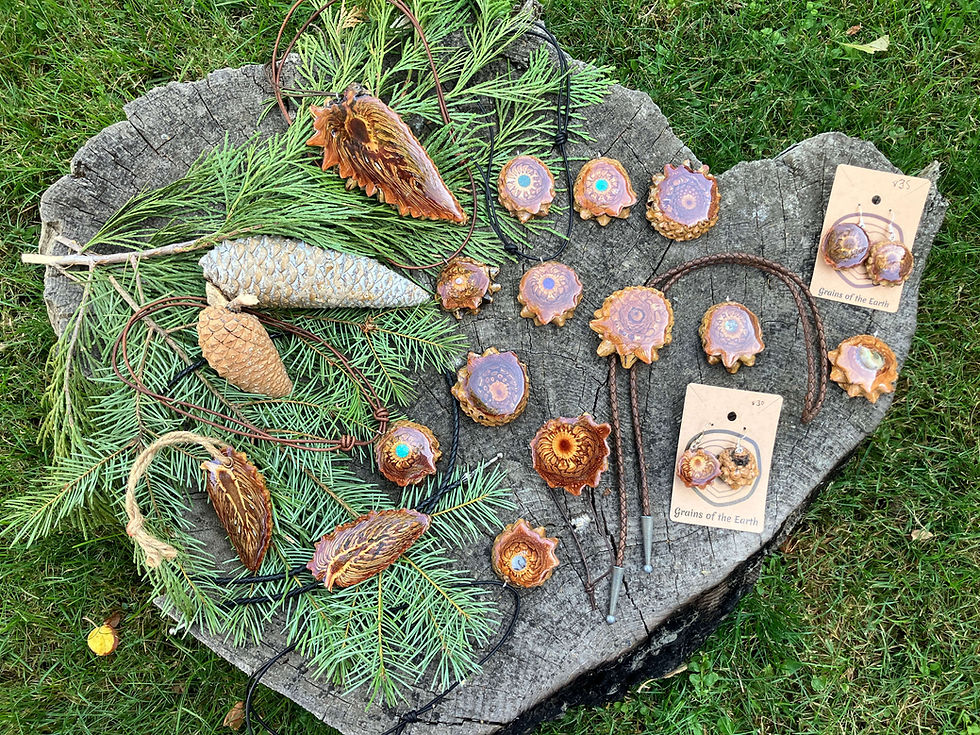
Grains of the Earth uses real knobcone pinecones to create necklaces, pendants, earrings, bolo ties, hat bands, ornaments and other forest-inspired pieces.
What Is a Knobcone Pinecone?
A knobcone pinecone comes from the knobcone pine, scientifically known as Pinus attenuata.
Knobcone pine is native to western North America. Its natural range includes parts of southwestern Oregon and California, including the Klamath, Cascade, Coast and Sierra Nevada regions, with scattered populations extending farther south.
One of the most fascinating characteristics of the knobcone pine is its relationship with fire.
Knobcone pine produces woody cones that can remain tightly closed and attached to a tree for many years. The cones are sealed with resin, and intense heat can cause that seal to break so the cone opens and releases its seeds.
This adaptation is known as serotiny.
Fire has historically played an important role in the regeneration of knobcone pine communities. After fire opens the cones, seeds can fall onto newly exposed ground where competition from surrounding vegetation has been reduced.
It is an extraordinary example of a plant adapted to disturbance, change and renewal.
That natural history is one reason the knobcone pine makes such a compelling material for jewelry centered around nature, resilience and transformation.
Why Are Knobcone Pinecones Used for Jewelry?
Knobcone pinecones have a dense, woody structure and distinctive internal pattern that becomes visible when the cone is cut.
From the outside, someone walking through the forest may simply see a rugged brown cone attached to a branch or lying among forest material. Inside, however, is an intricate structure that most people never see.
Cutting and finishing the cone exposes that hidden design.
Warm brown, amber, tan and golden tones can appear throughout the natural material. The shape and arrangement of the scales create repeating patterns around the center of the pinecone, while natural imperfections and variations prevent two pieces from looking exactly alike.
Some designs preserve that natural center. Others use an accent such as opal, shell, fossil or another decorative material to create contrast between the organic pinecone and the central inlay.
The beauty comes from the combination of natural variation and human craftsmanship.

Why Does Every Pinecone Pendant Look Different?
Pinecones are natural materials, not manufactured blanks.
Each cone develops with its own shape, scale arrangement, coloring, center, grain and history. After the cone is cut, those differences become even more visible.
One pinecone may reveal a nearly symmetrical circular design. Another may have an irregular outline. Some pieces are light brown or golden, while others contain darker brown and amber tones.
Even when two pieces are made in the same style, their internal patterns will not be identical.
For Grains of the Earth, those variations are not flaws that need to be hidden. They are part of what makes real pinecone jewelry special.
A handmade pinecone necklace is therefore different from a mass-produced pendant made from a mold. The natural material determines much of the finished appearance.
How Is Pinecone Jewelry Made?
Creating jewelry from a real pinecone requires more than simply cutting a cone and attaching it to a necklace.
At Grains of the Earth, the process begins with the pinecone itself.
Knobcone pinecones are gathered near Mt. Shasta in Northern California. Grains of the Earth focuses on responsibly gathered natural material, including cones found on branches brought down by natural conditions rather than removing cones from living trees.
The pinecones are then selected, cleaned and prepared for use.
Revealing the Interior
The direction of the cut helps determine the finished shape.
A cross-section can reveal a rounded interior pattern ideal for a traditional pinecone pendant or bolo tie.
A vertical cut reveals an entirely different structure. The long interior layers can create a natural feather-like shape, which is used in Grains of the Earth’s handmade pinecone feather necklaces.
Shaping and Finishing
Once cut, the piece is carefully shaped and finished by hand.
Depending on the design, the natural center of the pinecone may remain visible or an accent may be incorporated into the piece. Grains of the Earth designs include natural centers as well as pieces featuring materials such as opal, abalone and ammonite fossil.
The pinecone surface is then sealed and finished to protect the natural material and highlight its pattern.
Many Grains of the Earth pendants use UV-hardened marine-grade epoxy, creating a smooth, glossy surface while allowing the pinecone’s natural detail to remain visible.
The final piece is assembled into a necklace, pendant, bolo tie or another wearable design.
From Forest Material to Wearable Art
One of the most unusual things about real pinecone jewelry is the transformation involved.
The outside of a pinecone gives very little indication of what is hidden inside.
After it is cut, sanded, shaped and finished, the material begins to look dramatically different from the cone it came from. Rings and repeating scale patterns become more prominent.
Colors become richer. Details that were hidden inside the pinecone become the primary design.
The jewelry is not simply shaped like nature.
It is made from nature itself.
That distinction is at the heart of Grains of the Earth.

Types of Pinecone Jewelry
Real pinecones can be transformed into several different forms of jewelry and accessories.
Pinecone Necklaces
A pinecone necklace places the natural material at the center of a wearable pendant design.
Some necklaces emphasize the untouched colors and patterns of the knobcone pinecone. Others combine the pinecone with colorful opal, shell or fossil accents.
A natural pinecone necklace is a strong choice for people who prefer earthy colors, woodland style, rustic jewelry and organic materials.
Pinecone Pendants
“Pinecone pendant” is often used interchangeably with pinecone necklace, although technically the pendant is the decorative piece hanging from the necklace or cord.
Real pinecone pendants can vary considerably in size, outline, coloring and center design because the raw material itself varies.
They can be worn as everyday nature jewelry, festival jewelry, outdoor-inspired accessories or meaningful reminders of a favorite landscape or place.
Pinecone Feather Necklaces
Not every pinecone has to be cut horizontally.
A vertical slice through a knobcone pinecone exposes elongated interior layers that can create a shape resembling a feather or leaf.
The result is still made from a real pinecone, but the appearance is completely different from a traditional round cross-section pendant.
Pinecone Earrings
Smaller sections of natural material can also be incorporated into earrings, creating another way to wear real pinecone jewelry.
Because the material comes from nature, even a coordinated pair can retain subtle differences in pattern and color.
Pinecone Bolo Ties
A real pinecone cross-section can also become the centerpiece of a bolo tie.
The natural brown, tan and amber tones of a knobcone pinecone pair naturally with western, rustic and outdoor-inspired clothing, making the bolo tie a distinctive alternative to traditional metal designs.
Grains of the Earth creates handmade pinecone bolo ties from real Mt. Shasta-area knobcone pinecones and finishes them by hand in McCloud.
Pinecone Hat Bands, Ornaments and Gifts
The same natural material can extend beyond necklaces and pendants.
Grains of the Earth also creates pinecone hat bands, ornaments, magnets and other handmade pieces inspired by the forests and landscapes of Northern California.
Together, these pieces offer different ways to carry a small piece of the natural world into everyday life.
What Does a Pinecone Symbolize?
Pinecones have appeared in art, ornament and cultural imagery for centuries.
There is no single universal meaning shared by every culture, religion or person. Symbolism changes depending on historical period, place and personal interpretation.
However, the natural characteristics of the pinecone have contributed to recurring associations with growth, renewal, regeneration, resilience and new life.
That connection is understandable from a botanical perspective. The familiar woody pinecone is a seed-bearing reproductive structure of a pine tree. It protects developing seeds and, when conditions are right, allows those seeds to disperse and potentially become new trees.
Pinecone imagery also appears in ancient art and funerary objects. In some historical Mediterranean contexts, scholars have associated the pinecone with fertility and regeneration.
Today, many people choose pinecone necklaces for simpler personal reasons as well. A pinecone can represent a love of forests, hiking, mountains, outdoor life, growth through difficult circumstances or a personal connection to a particular place.
The meaning of a pinecone necklace does not have to be universal to be meaningful.
What Is the Spiritual Meaning of a Pinecone?
Modern spiritual communities sometimes associate the pinecone with awareness, intuition, enlightenment and the “third eye.”
You may therefore see real sliced pinecone pendants described as third-eye pinecones or third-eye jewelry.
These associations should be understood as spiritual or symbolic interpretations rather than scientifically established properties of pinecones or jewelry.
For some wearers, those ideas are important. Others simply appreciate the geometry, natural history or beauty of the pinecone.
Both approaches can coexist.
A person may choose a pinecone pendant because of spiritual symbolism, because it reminds them of the forest, because they love Mt. Shasta, or simply because they find the natural pattern beautiful.
Is Pinecone Jewelry the Same as Third-Eye Pinecone Jewelry?
The terms sometimes overlap, but they are not exactly the same.
Pinecone jewelry is the broader term. It can refer to jewelry made from real pinecones as well as jewelry designed to look like pinecones.
Third-eye pinecone jewelry is a contemporary name often used for sliced pinecone pendants associated with spiritual or symbolic ideas involving intuition, awareness or the pineal gland.
A real knobcone pinecone pendant does not have to be spiritual jewelry. The same piece can be appreciated as natural jewelry, woodland jewelry, handmade art, Mt. Shasta jewelry or a unique gift.
Pinecones as a Symbol of Resilience
The ecology of knobcone pine adds another layer of meaning that is particularly relevant to Grains of the Earth.
Knobcone pine is strongly adapted to fire.
Its cones can remain closed on the tree for years while seeds are protected inside. When sufficiently heated, the resin sealing the cone can release and the scales can begin to open, allowing seeds to disperse.
A disturbance that appears destructive can therefore help create the conditions for another generation of knobcone pines.
For people who choose to interpret nature symbolically, that makes the knobcone pine an especially appropriate reminder of resilience, endurance, change and renewal.
The science and the symbolism are not the same thing—but in this case, the real ecology of the tree provides an authentic story behind the jewelry.
What Makes Mt. Shasta Pinecone Jewelry Different?
Place matters.
Grains of the Earth is based in McCloud, California, near Mt. Shasta in Northern California.
The knobcone pinecones used in our jewelry are gathered in the Mt. Shasta area before being transformed into finished pieces by hand in McCloud.
That gives the jewelry a direct connection to the landscape from which the material came.
For someone who has visited Mt. Shasta, hiked through Northern California, lived in the region or simply feels connected to the mountains and forests of the West, a pinecone pendant can become more than an accessory.
It can become a tangible reminder of place.
This connection between Mt. Shasta, McCloud, knobcone pinecones and handmade craftsmanship is central to Grains of the Earth.

How Grains of the Earth Gathers Pinecones
Responsible sourcing is important whenever natural material is used for art or jewelry.
Grains of the Earth focuses on hand-gathered knobcone pinecones from the Mt. Shasta area and uses material from naturally fallen branches rather than harvesting cones directly from living trees.
Wind, snow and other natural conditions can bring branches and cones to the forest floor, providing material that can be collected and transformed without requiring the removal of a cone from a living tree.
The approach reflects a simple idea: allow the forest to remain the source of inspiration without unnecessarily damaging the trees that make the work possible.
Real Pinecone Jewelry vs. Pinecone-Shaped Jewelry
Both can be beautiful, but they are fundamentally different.
A cast metal pinecone pendant is designed by a person and reproduced from a mold or model. Multiple pieces can therefore look nearly identical.
Real pinecone jewelry begins with an organic material that already contains its own pattern.
The maker can decide how to cut, shape, finish and present the material, but the pinecone contributes the grain, color, scale arrangement and natural irregularities.
For someone specifically looking for real pinecone jewelry, it is worth checking the product description carefully.
Look for clear information about what species or type of cone is used, where the material comes from, how it is prepared, whether the pendant pictured represents the actual piece or a representative design, and what finish protects the natural material.
Transparency is one of the easiest ways to distinguish genuine natural-material jewelry from jewelry that simply uses pinecone imagery.
How to Choose a Pinecone Necklace
The best pinecone necklace depends on what draws you to the material.
If you want the pinecone itself to be the focus, choose a natural design that leaves the center free from additional decoration. The warm brown and amber tones make these pieces especially suited to earthy, rustic and outdoor-inspired styles.
If you prefer more color, a pinecone pendant with an opal or shell center creates a stronger contrast against the natural material.
For a less traditional silhouette, a vertically cut pinecone feather necklace exposes an entirely different part of the cone's internal structure.
Someone drawn to western style may prefer a pinecone bolo tie, while a person looking for smaller or more subtle jewelry may prefer pinecone earrings.
Because real pinecone jewelry varies naturally, also pay attention to the individual pattern, shape and coloring of a piece rather than choosing only by product category.
Sometimes the right pendant is simply the one that catches your eye.

Natural Pinecone Jewelry
Not every pinecone pendant needs a gemstone or colorful center.
Natural pinecone jewelry emphasizes the material itself.
When the center remains natural, the viewer can focus on the internal rings, scales, color variation and pattern that were created as the cone developed.
For people who enjoy wood, forests, hiking, camping, natural materials or understated jewelry, a natural knobcone pinecone pendant can be one of the simplest ways to appreciate the beauty hidden inside the cone.
Pinecone Jewelry With Opal and Other Accents
Decorative centers can create an entirely different look.
Grains of the Earth designs include pinecone necklaces featuring materials such as Australian opal, peacock opal, Mt. Shasta opal, abalone and ammonite fossil.
The natural brown and amber tones of the pinecone provide a neutral frame around the brighter center, allowing the accent to stand out without hiding the organic pattern around it.
These pieces combine two kinds of visual interest: a naturally formed pinecone structure and a deliberately chosen centerpiece.
Is Pinecone Jewelry Durable?
Durability depends on how the piece is made and finished.
An untreated pinecone is an organic material and should not be expected to behave like metal or stone. Proper preparation and sealing help protect the surface and make it more suitable for wearable jewelry.
Grains of the Earth uses UV-hardened marine-grade epoxy on many of its pinecone pendants. The finish protects the natural material while giving the surface a smooth appearance and helping highlight the pinecone's internal pattern.
Even a sealed piece should still be treated as handmade jewelry.
Extreme heat, prolonged direct sunlight and abrasive cleaners should be avoided.
Always follow the care instructions for the specific piece you purchase.
How Do You Care for Pinecone Jewelry?
Pinecone jewelry is easy to care for when treated properly.
For Grains of the Earth pendants, gently wipe the finished surface with a soft dry or slightly damp cloth when cleaning is needed.
Avoid abrasive cleaners or rough materials that could scratch the finish.
Protect the jewelry from extreme heat and prolonged direct sunlight. Do not leave a pinecone pendant inside a hot vehicle or hanging from a rearview mirror, where temperatures can become much higher than normal outdoor conditions.
When the jewelry is not being worn, store it somewhere dry and protected from unnecessary heat or abrasion.
Is Pinecone Jewelry a Good Gift?
Pinecone jewelry can be an especially personal gift because it connects naturally with interests, experiences and places.
It can be meaningful for hikers, campers, nature lovers, gardeners, travelers and people who feel at home in the forest.
A Mt. Shasta pinecone necklace may also have special meaning for someone who has visited Northern California, lived near Mt. Shasta or McCloud, vacationed in the region, climbed the mountain or simply feels connected to the landscape.
Pinecone jewelry can also be chosen to represent growth, resilience, renewal or a new chapter in someone's life.
And because real pinecones naturally vary, handmade pinecone jewelry has another quality that works well for gifting: the piece does not feel mass-produced.
It has its own character.
Who Wears Pinecone Jewelry?
There is no single “pinecone jewelry style.”
Real pinecone jewelry is worn by people interested in nature-inspired jewelry, woodland jewelry, western fashion, bohemian style, festival jewelry, hiking and outdoor culture, handmade art and regional gifts.
A natural pinecone pendant can look understated and earthy. An opal-centered pendant can be colorful and eye-catching. A pinecone bolo tie fits naturally into western clothing, while a feather-shaped pinecone necklace can feel more organic or bohemian.
The common thread is an appreciation for natural material and unusual craftsmanship.
Why Buy Handmade Pinecone Jewelry?
Handmade natural-material jewelry is inherently different from mass-produced jewelry.
The maker has to respond to the individual material instead of forcing every piece into an identical mold.
The shape of the pinecone affects the cut. The cut reveals the pattern. The pattern influences how the piece is shaped and finished.
That relationship between material and maker is part of the finished product.
At Grains of the Earth, every pinecone begins its journey in the forests around Mt. Shasta and is transformed by hand in McCloud, California.
From forest material to finished jewelry, no two journeys produce exactly the same result.
Frequently Asked Questions About Pinecone Jewelry
What is pinecone jewelry?
Pinecone jewelry is jewelry inspired by or made from pinecones. Real pinecone jewelry uses actual natural pinecone material, while other designs reproduce a pinecone's shape in metal, resin or another material.
Is pinecone jewelry made from real pinecones?
Some is and some is not. Always check the product description. Grains of the Earth makes its pinecone jewelry from real knobcone pinecones gathered near Mt. Shasta in Northern California.
What kind of pinecones does Grains of the Earth use?
Grains of the Earth uses knobcone pinecones from the knobcone pine, Pinus attenuata.
Where do knobcone pinecones grow?
Knobcone pine occurs naturally in western North America, with populations from southwestern Oregon through several California mountain and coastal ranges and scattered populations farther south. Grains of the Earth gathers knobcone pinecones near Mt. Shasta in Northern California.
Why do knobcone pinecones stay closed?
Knobcone pine is a fire-adapted species. Its cones can remain closed and attached to the tree for many years because resin helps seal the scales. Sufficient heat can break that seal and allow the cone to open and release seeds.
Is knobcone pine fire resistant?
The tree itself can be killed by intense fire, but its reproductive strategy is strongly adapted to fire. Heat can open the persistent cones and release seeds, allowing a new generation of trees to establish after a fire.
Why are pinecone pendants unique?
Natural differences in each pinecone's shape, color, scale arrangement, center and internal structure create variations that remain visible after the cone is cut and finished. As a result, real pinecone jewelry naturally varies from piece to piece.
What does a pinecone necklace symbolize?
There is no single universal meaning. Pinecones have been associated in different contexts with ideas such as growth, regeneration, renewal and resilience. Many people also wear them simply because they love forests, mountains or nature.
What does a pinecone mean spiritually?
Some contemporary spiritual traditions associate the pinecone with intuition, awareness, enlightenment or the “third eye.” These are spiritual interpretations rather than scientifically established properties.
What is a third-eye pinecone?
“Third-eye pinecone” is a contemporary term sometimes used for sliced pinecone pendants associated with spiritual symbolism. It is not a botanical species or scientific classification.
How is a real pinecone necklace made?
The process varies by maker. Grains of the Earth selects, cleans and prepares real knobcone pinecones, cuts them to reveal their interior pattern, shapes and finishes the material by hand, and seals many designs with UV-hardened marine-grade epoxy.
Can a pinecone be cut into different shapes?
Yes. A cross-cut cone can create a rounded pattern, while a vertical cut can expose elongated interior layers and create a feather-like silhouette.
Is every pinecone necklace identical?
No. Natural differences between pinecones mean patterns, shapes and colors vary. Those variations are part of the appeal of real pinecone jewelry.
Is pinecone jewelry waterproof?
Water resistance depends on the specific construction and finish. Many Grains of the Earth product listings describe the finished pendant as waterproof because it is sealed with marine-grade epoxy. Always check the individual product specifications, since cords, hardware and designs can vary.
Can pinecone jewelry get hot?
Like many resin-finished and natural-material products, pinecone jewelry should be protected from extreme heat. Do not leave it inside a hot vehicle or hanging from a rearview mirror.
How do you clean a pinecone necklace?
Use a soft dry or slightly damp cloth and avoid abrasive cleaners. Follow the specific care instructions supplied with your jewelry.
Where is Grains of the Earth pinecone jewelry made?
Grains of the Earth finishes its handmade pinecone jewelry in McCloud, California, using knobcone pinecones gathered near Mt. Shasta in Northern California.
Where can I buy real pinecone jewelry?
Grains of the Earth offers handmade necklaces, pendants, earrings, bolo ties, hat bands, ornaments and gifts created from real knobcone pinecones gathered near Mt. Shasta.
Discover Handmade Pinecone Jewelry From Mt. Shasta
A pinecone is easy to overlook when you see one in the forest.
Cut it open, however, and an entirely different world appears.
Hidden beneath the scales are natural patterns, colors and shapes created over years of growth. Grains of the Earth transforms those patterns into handmade jewelry while preserving the individuality of the material that created them.
Our knobcone pinecones are gathered near Mt. Shasta in Northern California and transformed by hand in McCloud, California into pinecone necklaces, pendants, earrings, bolo ties, hat bands and other nature-inspired pieces.
Every pinecone has its own story.
Every cut reveals something different.
And every finished piece carries a small part of the landscape it came from.
From forest floor to wearable art.
About Grains of the Earth
Grains of the Earth is a handmade jewelry and gift business based in McCloud, California, near Mt. Shasta. Founders Dave and Jessy create jewelry, accessories and gifts from real knobcone pinecones gathered in Northern California. Each piece is prepared and finished by hand, combining natural materials, craftsmanship and the landscape of the Mt. Shasta region.
Written and reviewed by Grains of the Earth | McCloud, California

